Poker Terms for Beginners: A Short Glossary for the Table
Sitting at a poker table for the first time can feel like walking into a room where everyone speaks another language. Words like flop, kicker, or nuts sound familiar to experienced players but confusing to beginners. Learning the most common poker terms will help you follow the game much faster.
This short glossary is not arranged alphabetically. Instead, it is grouped by topic: table terms, action terms, card terms, and terms that describe situations or player behavior. That way, you can remember each word in its context.
Poker Terms About the Table and the Hand
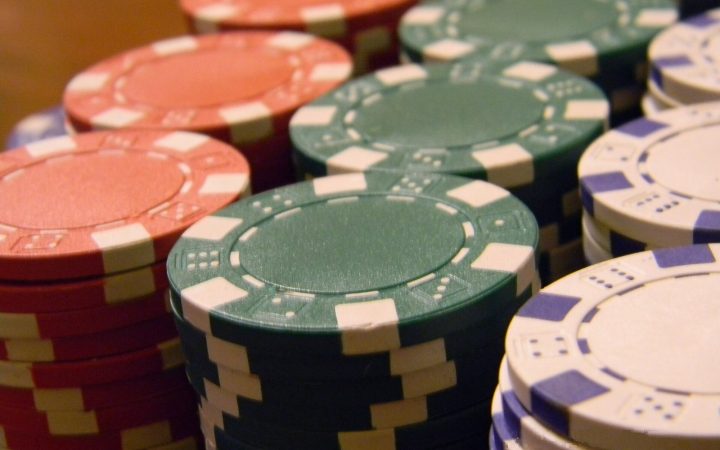
- Pot: the collection of chips bet during one hand, which players compete to win.
- Blind: a forced bet made before cards are dealt, made up of the small blind and the big blind.
- Ante: a small forced bet from every player in some formats, in addition to the blinds.
- Dealer button: the marker that shows who is treated as the dealer for that hand.
- Stack: the number of chips a player has in front of them.
- Orbit: one full rotation in which the button has passed every seat.
- Rake: a small portion of the pot taken by the organizer at some tables, with the amount set by house rules.
These table terms are usually the first ones you hear, even before any cards are dealt. The dealer will say who posts the blinds, how big a new player’s stack is, and when the next orbit begins.
Action Terms When It Is Your Turn
- Check: pass without adding a bet, possible only when no bet has been made.
- Bet: make the first wager in a betting round.
- Call: match the current highest bet.
- Raise: increase an existing bet.
- Re-raise or 3-bet: raise again after an earlier raise.
- Fold: give up and leave the hand.
- All-in: bet all of your remaining chips.
- Limp: enter the hand preflop by just calling the big blind, without raising.
Card and Board Terms
- Hole cards: the two private cards that only their owner knows.
- Board: the set of community cards in the middle of the table.
- Flop, turn, river: the first three community cards, the fourth card, and the fifth card.
- Pocket pair: two hole cards of the same rank, such as two sevens.
- Suited: two hole cards of the same suit.
- Kicker: a side card used to decide the winner when the main combination is the same.
- Burn card: the top card discarded face down before community cards are revealed.
Using the Terms in a Sentence
“I had a pocket pair, but the board came with three cards of one suit.” You will often hear sentences like this after a hand ends. Once you understand each word, you can follow the story without guessing.
Terms About Odds and Hand Strength
- Outs: cards left in the deck that can improve your hand into one that is likely to be ahead.
- Draw: an unfinished hand that needs a specific card, such as a flush draw.
- Nuts: the best possible hand given the community cards at that moment.
- Pot odds: the ratio between the size of the pot and the amount you must pay to call.
A simple example of outs: if you hold four hearts after the flop, nine other hearts remain unseen among the 47 cards you do not know. Those nine cards are your outs for a flush.
The word nuts is also often misunderstood. The best hand at one stage can change at the next. A straight that is the nuts after the flop can lose that status if the turn brings a third card of one suit, because a flush is now possible.
Terms About Behavior and Situations
| Term | Short meaning |
|---|---|
| Bluff | Betting with a weak hand so that opponents give up |
| Tilt | An emotional state that leads to careless decisions |
| Tell | A habit or movement that unintentionally gives a clue |
| Slow roll | Deliberately delaying the reveal of a hand that clearly wins |
| Heads-up | A situation where only two players remain |
The word tilt deserves special attention. Tilt can appear after losing several hands in a row, after feeling unlucky on the last card, or simply because of fatigue. When emotions start to take over, that is a good signal to stop and take a break. Meanwhile, a tell is not always a body movement. The speed of an action and the pattern of bet sizes can also be clues.
A Quick Way to Memorize the Terms
- Study one group of terms each time you practice.
- Say your actions using the correct terms when you play with friends.
- After a hand ends, retell what happened using those terms.
Final Thoughts
Terms are simply tools that help everyone at the table understand the same thing quickly. Once this vocabulary feels familiar, the other rules become much lighter. When you practice, use chips with no money value and limit your time. Keep in mind that gambling laws differ from country to country, some countries ban it, and poker played for money is only for people who meet the legal age where they live.